The Winning Bid Is Not the Price You Pay
Every first-time auction buyer learns the same lesson the same way. You study the listings, you find the car, you bid $4,500, and you win. Then the invoice arrives and the number at the bottom is closer to $5,900.
None of that money is a scam, and none of it is truly hidden. Auction fees are published in full. The problem is that they are spread across a fee schedule most buyers never read until after they have committed to a purchase. This guide breaks down every fee attached to a Copart or IAAI purchase, explains which ones are fixed and which scale with the sale price, and shows you how to calculate your real cost before you place a bid.
Why Auction Fees Exist at All
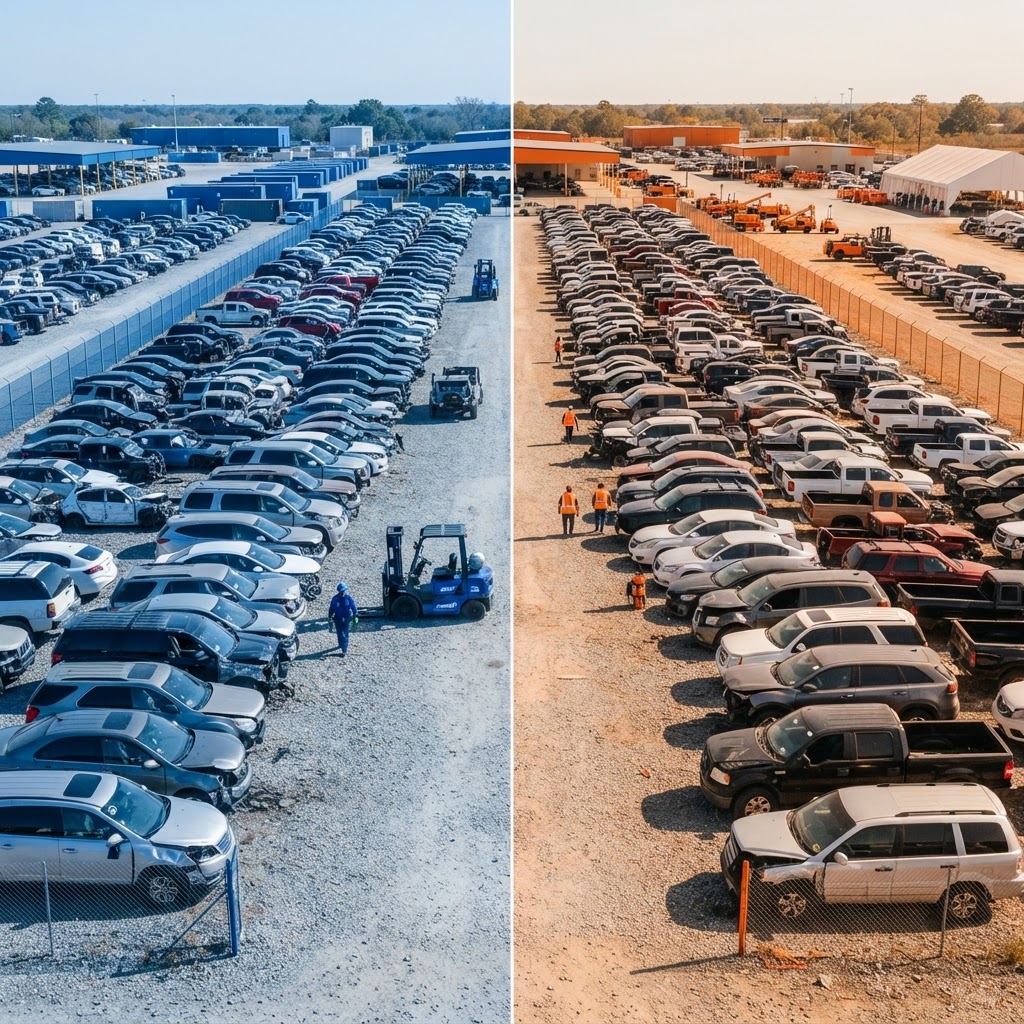
Copart and IAAI are marketplaces, not dealerships. They do not own most of the vehicles they sell. They provide the yard, the photography, the title processing, the bidding platform, and the legal framework that lets an insurance company in Texas sell a flood-damaged SUV to a buyer on the other side of the world. Every one of those services costs money, and at auction that cost is passed to the winning bidder rather than to the seller. That is why you pay a buyer fee while the seller pays a separate, usually larger, seller fee you never see.
The Core Buyer Fee: Tiered by Sale Price
The largest line item on almost every invoice is the buyer fee, sometimes called the buyer's premium or service fee. It is tiered by the sale price of the vehicle, not a flat percentage. A cheap vehicle carries a disproportionately high fee percentage; an expensive one carries a lower percentage but a larger absolute number.
Each auction publishes its own tiers and revises them periodically, so treat the structure below as the shape of the curve rather than a fixed rate card. Always confirm against the current official schedule for the auction and yard handling your vehicle.
| Sale price band | Typical buyer fee | Effective rate |
|---|---|---|
| Under $1,000 | $100 - $250 | often 15% - 25% |
| $1,000 - $4,000 | $250 - $550 | roughly 10% - 20% |
| $4,000 - $10,000 | $550 - $1,000 | roughly 9% - 14% |
| $10,000 - $25,000 | $1,000 - $1,800 | roughly 7% - 10% |
| Above $25,000 | $1,800+ | falls below 7% |
Two consequences follow from this curve. First, a $1,200 project car can carry a buyer fee approaching 40% of the sale price once the fixed charges are included. Second, the fee jump between tiers can be larger than the bid increment you are fighting over, which is why losing an auction by $50 sometimes means paying $200 more in fees on the next car you win.
Internet Versus In-Person Bidding
If you bid through the website or mobile app you will see an internet bid fee. It is usually a modest fixed amount, but it is charged per vehicle won, so it multiplies across a multi-car purchase. Buyers bidding in a physical lane at the yard generally avoid it. For international buyers this fee is effectively unavoidable, because it applies to every online purchase.
Fixed Fees You Will See on Nearly Every Invoice
- Gate fee or gate admission. A per-vehicle charge for moving the car through the yard gate, loading it onto a transporter, and releasing it. It is charged whether you arrange your own transport or use the auction's logistics partner.
- Title handling and title mailing fee. Covers pulling the title from the seller, transferring it, and mailing it to you or your broker. If the title must be couriered internationally, expect an additional courier charge on top.
- Environmental or cleanup fee. Applies to handling fluids, batteries, and refrigerants. More common on vehicles that arrive non-running, and it is one of the few fees that varies by how the car was stored rather than by what you paid.
- Service or processing fee. An administrative charge for generating the invoice and processing your payment.
- Export documentation fee. Charged when the auction must prepare an export certificate or bill of lading on your behalf.
Individually these look trivial. Together they commonly add $80 to $250 to a single vehicle before any transport is involved, and they fall hardest on the cheapest cars where the buyer fee is already proportionally high.
Fees That Only Appear When Something Goes Wrong
These are the ones that turn a carefully planned budget into a loss, because they are entirely avoidable and entirely your responsibility once the hammer falls.
- Storage. Most sales include a short free storage window, often a handful of business days. After that, daily storage accrues. A car that sits for three weeks while you arrange transport can quietly accumulate several hundred dollars. Storage is the single most common cause of unplanned auction cost.
- Late payment. Payment is due within a short window, typically a few business days. Miss it and you may face a late fee, and at some auctions the sale can be voided.
- Relist or reinstatement fee. If you fail to pay, the vehicle can be relisted and you may be charged a fee for the failed transaction. In the worst case you lose the vehicle and still owe money.
- Yard-to-yard transfer. If the vehicle is stored at a yard that cannot release it to your chosen carrier, moving it between facilities is billed to you.
- Reinspection or re-keying fee. Applies if you request a condition recheck or if keys have to be cut, and it is worth confirming before bidding whether keys are actually present.
A Worked Example: The Real Cost of an $8,000 Win
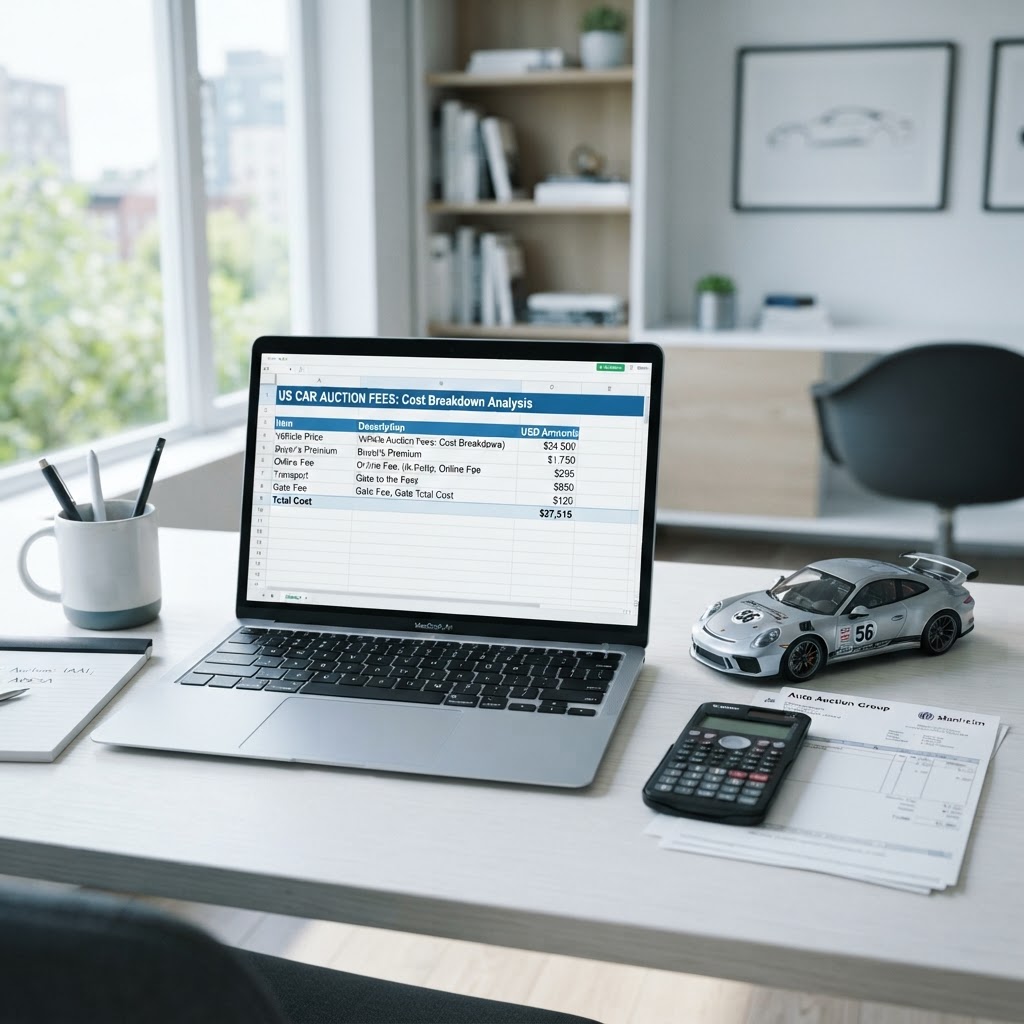
Here is how a typical invoice builds up on a mid-range salvage vehicle won online, using representative figures:
| Line item | Amount |
|---|---|
| Winning bid | $8,000 |
| Buyer fee | $780 |
| Internet bid fee | $75 |
| Gate fee | $79 |
| Title handling and mailing | $65 |
| Environmental and service fees | $45 |
| Auction total | $9,044 |
The car cost roughly 13% more than the winning bid, and nothing has left the yard yet. If the vehicle then waits in storage for two weeks, add another few hundred dollars. If a broker handled the bidding and paperwork, add their commission. If it is shipping overseas, the freight, customs, duty, and registration costs are still entirely ahead of you.
The Costs That Are Not Auction Fees
This is where most budgets actually break, because these costs are real, large, and easy to underestimate when you are focused on the invoice.
- Broker commission. Many international buyers bid through a broker who provides a US address, handles payment, and manages title and release. Commission is typically a flat fee or a percentage of the sale price, and it is charged on top of the auction's own fees.
- Inland transport. Moving the vehicle from the yard to the port of export, usually several hundred dollars depending on distance.
- Ocean freight. Either RoRo or container. Container shipping generally costs more but allows parts and personal effects to travel with the car.
- Customs clearance, duty, and VAT. Calculated on the vehicle's assessed value plus freight and insurance, not on what you paid at auction. In many countries this is the largest single cost after the car itself.
- Local registration and repairs. Conversion to local standards, inspection, and any repair the vehicle needs before it can be driven legally.
We cover these in detail in our guide to the true cost of importing a salvage car from the US and in the complete logistics guide, both of which are worth reading before you bid rather than after.
How to Calculate Your True Landed Cost
Before you place a bid, work the numbers in this order:
- Set your landed budget first. Decide the total you can spend for the car in your driveway, then work backwards. Bidding up to a budget is easy; discovering afterwards that the budget covered only the auction is expensive.
- Estimate the buyer fee for the tier you expect to bid in. Use the published schedule, not a guess. Remember the tier above can cost more than the tier you are in.
- Add the fixed charges. Internet bid fee, gate fee, title handling, environmental, and service charges. Add roughly $150 to $250 for a single vehicle as a working assumption.
- Add broker commission if you use one.
- Add storage. Assume you will pay at least a little, and plan to collect the vehicle promptly.
- Add transport, freight, customs, duty, and registration. These are the biggest variables, so get real quotes rather than estimates.
- Subtract the total from your landed budget. The result is your true maximum bid. Bid to that number, not to the number that feels exciting.
Seven Ways to Reduce What You Pay in Fees
- Collect the vehicle inside the free storage window. Storage is the largest avoidable cost on this list. Have your transport arranged before you bid, not after you win.
- Pay immediately. Late fees and relist fees are entirely preventable.
- Buy keys with the car where possible. A vehicle with keys is cheaper to move, cheaper to inspect, and cheaper to re-key later.
- Consolidate multiple vehicles into one shipment. Broker commission, inland transport, and ocean freight all scale down per car when you ship several together.
- Check title status before bidding. A title that needs additional processing can add cost and delay. Our guide to salvage title types explains what each designation means for you.
- Price the whole cost before choosing the auction. A lower buyer fee at one platform can be erased by a higher gate fee or a yard further from the port. See our comparison of Copart versus IAAI for international buyers.
- Verify the vehicle is worth bidding on at all. Running a VIN report before you commit is far cheaper than discovering undeclared damage after you have paid the fees.
Your Pre-Bid Fee Checklist
- Current buyer fee tier for the price range you expect to bid in
- Internet bid fee, charged per vehicle
- Gate fee
- Title handling and mailing, plus international courier if needed
- Environmental and service charges
- Free storage window, and the daily rate after it ends
- Payment deadline
- Broker commission, if applicable
- Inland transport to port
- Ocean freight method and cost
- Customs clearance, duty, and VAT in your country
- Local inspection, conversion, and registration
The Bottom Line
Auction fees are not a trick, but they are a discipline. The buyers who lose money at auction are rarely the ones who overpaid for the car. They are the ones who bid against the sale price and budgeted for the vehicle, then met the invoice for the first time when it was already too late to change their mind.
Calculate the full cost before you bid, bid to a number you can defend, and collect the car promptly. Do that consistently and the fees stop being a surprise and simply become part of the price.
Looking for a specific salvage vehicle? Search our auction database by VIN, make, or model.
Search Auction Vehicles