## The Report Is the Only Honest Witness
Almost nobody who buys a salvage car from a US auction flies to see it first. The vehicle sits on a gravel lot somewhere in Texas or Georgia, the auction runs in ninety seconds, and the buyer is nine time zones away watching a photo gallery. In that situation, the condition report is not a formality. It is the only evidence you have.
Most bidders skim it. They look at the damage code, glance at the first photo, and set a number based on what a similar car sold for last week. That is exactly how people end up paying for a car with a bent frame rail, a flooded floor pan, or a blown engine that the report mentioned in two words.
This guide explains where condition reports come from, what their grades actually guarantee, and how to interrogate the photos and codes before you commit money.
---
## Who Writes the Condition Report
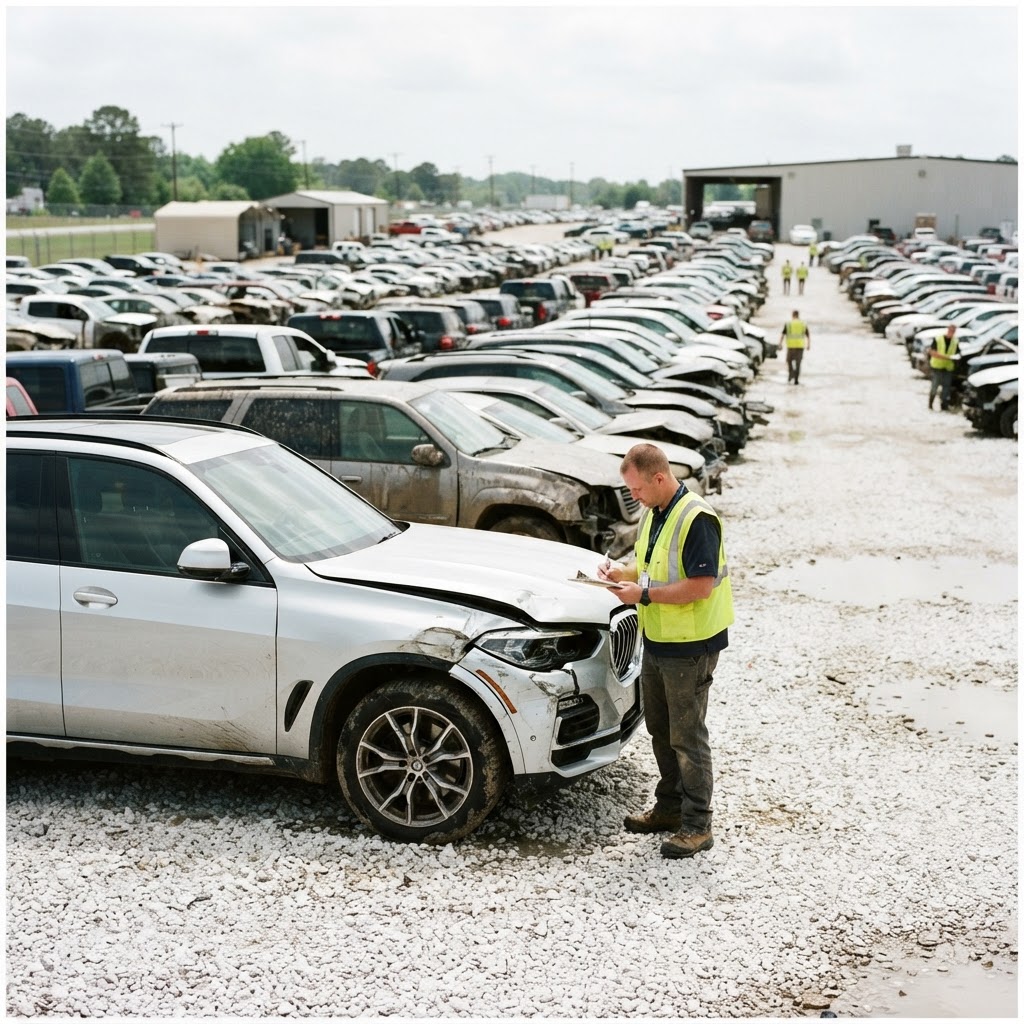
Both Copart and IAAI generate condition reports through lot staff, not independent mechanics. The person walking the vehicle is usually checking in inventory at scale: they confirm the VIN, note visible damage, mark whether it starts or drives, take 30 to 80 photographs, and move on.
That has three practical consequences:
- **The report describes what is visible and observable in minutes.** It is not a diagnosis. Nobody has put the car on a lift, checked compression, or scanned the ECU for stored codes.
- **Observations are inconsistent between lots.** A careful inspector in Dallas may photograph under the hood; an inspector processing 200 cars in a day may not.
- **Absence of a noted problem is not evidence of absence.** "Primary damage: front end" does not mean the rest of the car is sound.
When a listing says *Enhanced Inspection*, *Sold with a mechanical report*, or *Present mechanical inspection*, an independent third party has usually done a short functional check. That is worth more than the standard checklist, but it still is not a mechanical certification. Treat it as a stronger hint, not a warranty.
---
## What Each Condition Grade Really Promises
The condition field is the most over-read line in any listing. Here is what the grades practically mean.
**Run & Drive** — the vehicle started and moved under its own power when it was checked in. It says nothing about how well it drives, whether it shifts through all gears, or whether it will survive a cold start next month. Cars that run for thirty seconds on a lot can still have transmission or cooling faults.
**Starts** — the engine turned over and ran in place, but the vehicle did not move. Often this masks a drivetrain, brake, or linkage problem, or simply a flat tire nobody bothered to air up.
**Does Not Run** — the engine did not start during check-in. The causes range from a dead battery to a seized motor. Budget for the worst case and treat a cheap fix as upside.
**Enhanced Inspection** — a separate inspection service (often Engine Start Test, Engine Run Test, or a mechanical inspection report) was performed. Read the report itself if it is attached, and note what it covered and what it skipped.
**Stationary or non-runner with unknown cause** — the most unpredictable grade. Flood, fire, and theft-recovery vehicles frequently land here.
---
## Damage Codes and Severity
Every listing carries a **primary damage** and sometimes a **secondary damage** field. The primary code drives the price; the secondary code is where surprises hide.
- **Front end** is the most common and usually the most repairable. Look for damage that reaches the shock towers or apron.
- **Rear end** can be deceptive. A soft hit can still kink the rear rail or crack the quarter panel seams.
- **Side** damage often means airbag deployment and a B-pillar or rocker issue.
- **Rollover** almost guarantees a compromised roof structure, plus oil starvation if the engine kept running.
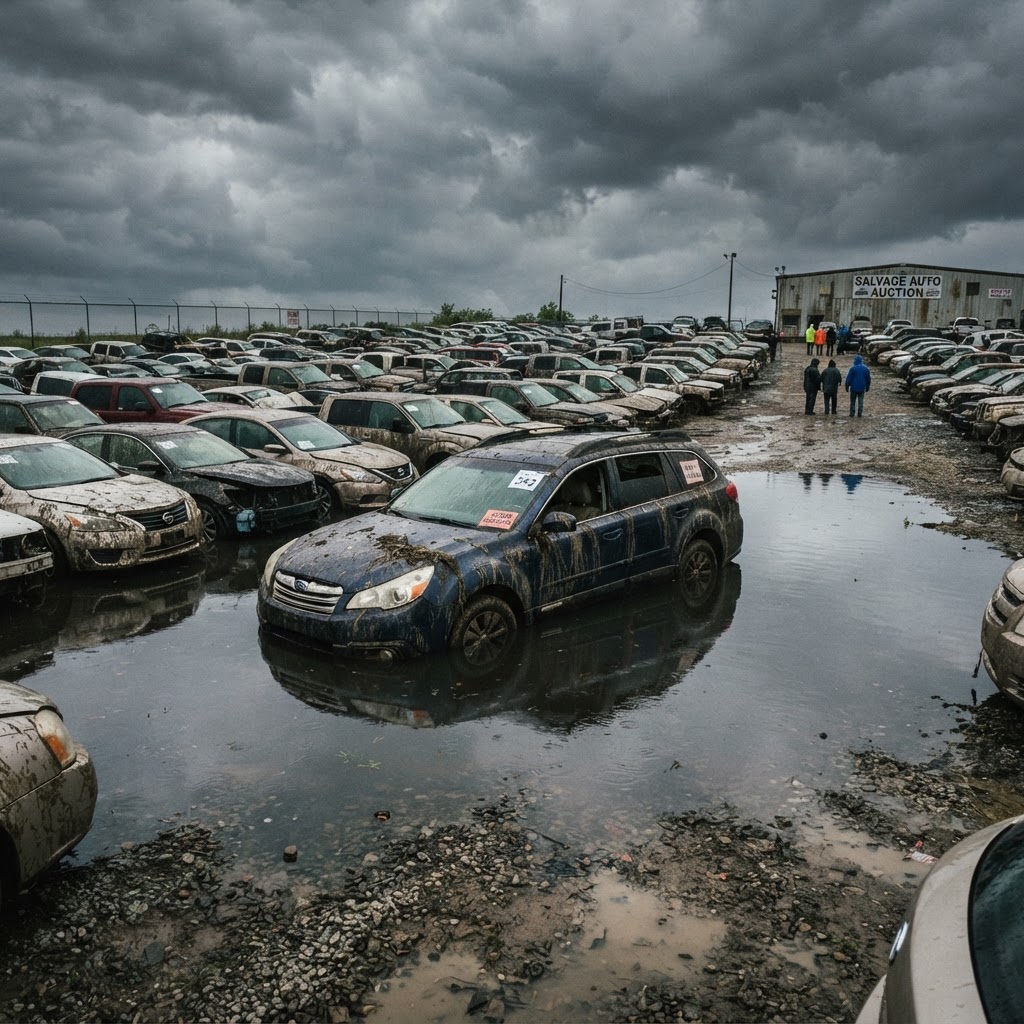
- **Water / Flood** is the highest-risk category. Electronics, wiring harnesses, connectors, and interior modules fail months later, not on the day of the auction.
- **Burn / Fire** damage is rarely cosmetic. Heat distorts structural metal and destroys harnesses in ways photographs cannot show.
- **Undercarriage** and **All Over** imply broad impact or vandalism, and the repair estimate is essentially a guess.
Severity (Minor, Moderate, Severe, Total Loss) is assigned relative to the vehicle's estimated retail value, not to repair cost. A 60,000-dollar SUV can be marked Moderate with 28,000 dollars of damage that would total a used sedan.
---
## How to Read the Photos Like an Inspector
This is where most bidders give away their advantage. The gallery is not there to sell the car; it is there to document it. Every angle was chosen by someone who had to defend that documentation later.
**Look at the frame first, not the paint.** Request or zoom into any photo of the engine bay with the hood open. Check whether the apron, shock tower, or frame horn is creased or freshly straightened. Mismatched undercoating, fresh seam sealer, or a suspiciously clean patch on a dirty rail is a warning.
**Measure panel gaps in the pictures.** Uneven gaps between the fender and hood, or a hood that sits higher on one corner, suggest unibody deflection rather than a bolt-on part.
**Check the interior shots for water lines.** Flood cars leave tide marks on door cards, seat frames, carpet edges, and seatbelt webbing. Look for mud in the spare wheel well, fogging inside the lamps, and rust on seat rails that does not match the car's age.
**Confirm airbag status visually.** If the listing says airbags not deployed but the steering wheel cover is split or the passenger dash is torn, believe the photo, not the field. Deployed airbags mean new clocksprings, modules, pretensioners, and often a dashboard.
**Read the tires.** Uneven wear indicates suspension or alignment problems that predate the accident. Four mismatched budget tires on a late-model car hint at a previous life the report does not describe.
**Count what is missing.** Wheels, catalytic converters, head units, seats, and mirror glass get removed at yards. Missing parts are your cost, and they are easy to miss when you are focused on the damage.
**Check the background.** The lot around the car tells you what kind of event it came from. A car parked among clean late-model insurance units is a different story from one sitting in a flood row.
---
## The Fields Worth Checking Twice
- **Odometer** — verify it is plausible for the model year, and watch for exempt or branded readings. Rollback mileage on total-loss cars is rare but not unheard of.
- **Keys available** — no keys means a locksmith, a new key programming session, and possibly an immobilizer issue. It also means you cannot hear it run.
- **Estimated retail value** — the anchor for your bid math and for damage severity. Cross-check it against real local prices for the same trim and mileage; auction estimates run optimistic.
- **Title status** — Salvage, Rebuilt, Flood, Junk, or Certificate of Destruction. A Certificate of Destruction usually cannot be rebuilt or exported as a vehicle, only parted out.
- **Sale date and location** — a car in Seattle going to a Jebel Ali buyer pays very different inland freight than one in Houston.
- **Auction source and lane** — late lanes and offsite lots sometimes come with less documentation.
---
## Red Flags That Should End Your Interest
Most listings can be priced for their risk. A few cannot:
- Fire damage reaching the firewall, cowl, or cabin harness.
- Flood water above the seat cushion line, or an EV with water intrusion into the battery pack area.
- Rollover with roof deformation over a door opening.
- Missing front structure photos on a car with heavy front damage.
- A VIN that does not decode to the year, make, model, and trim in the listing title.
- A Junk or Certificate of Destruction title when your plan is export and rebuild.
---
## Verify the VIN Before You Bid
Auction listings are written by people moving inventory fast, and they contain errors: wrong trims, wrong engines, wrong years. The VIN is the only identifier you can check for free.
Before bidding, decode the VIN on [our VIN lookup](/vin/JTHBK1GG1F2181634) to confirm the actual year, make, model, body style, engine, drivetrain, and plant of manufacture. The same page shows open safety recalls and, when we have one, the auction history for that specific car, including what it sold for previously.
Two checks take five minutes and routinely save bidders four figures:
1. **Confirm the specification.** A sport package that turns out to be a base model changes parts availability and resale value.
2. **Check the recall record.** An open recall on a safety-critical component can be a free fix at a dealer, or a reason to walk away from a car that was already compromised.
If you want the deeper history, including previous listings, sale prices, and damage patterns for the same model, get the [full VIN report](/vin-report) before the auction opens, not after you have won.
---
## Pricing the Risk, Then Bidding
Once you have read the report and the photos, convert what you found into money. Add the repair estimate, the auction fees, inland transport to the port, ocean freight, destination duties, and a contingency of 15 to 25 percent for what the photos could not show. The number you arrive at is your ceiling.
The most common mistake international buyers make is bidding against the car's retail value instead of its landed cost. A salvage car is cheap until the freight, duty, and repairs land on top of it.
Browse [current inventory](/search) with the damage codes you are comfortable with, filter by your region's ports to keep inland freight down, and track your [container](/container-tracking) once the car is on the water.
---
## The Bottom Line
A condition report does not tell you whether a car is good. It tells you what a stranger noticed in five minutes and photographed for the record. Your job as a remote buyer is to read the gaps: the angles missing from the gallery, the mechanical questions nobody asked, and the VIN details nobody verified. Do that and the auction stops being a gamble and becomes a calculation.
#condition report#Copart#IAAI#salvage auction#damage photos#buyer checklist#import guide#pre-bid inspection
Looking for a specific salvage vehicle? Search our auction database by VIN, make, or model.
Search Auction Vehicles